Web systems that replace manual operations across teams
Portals, dashboards, ERP/CRM, and integrations — built to reduce errors, downtime, and operational costs.
System design before implementation, predictable performance under load, data security, and stable operations during peak hours.
Infrastructure and hosting are sized for your load and budget.
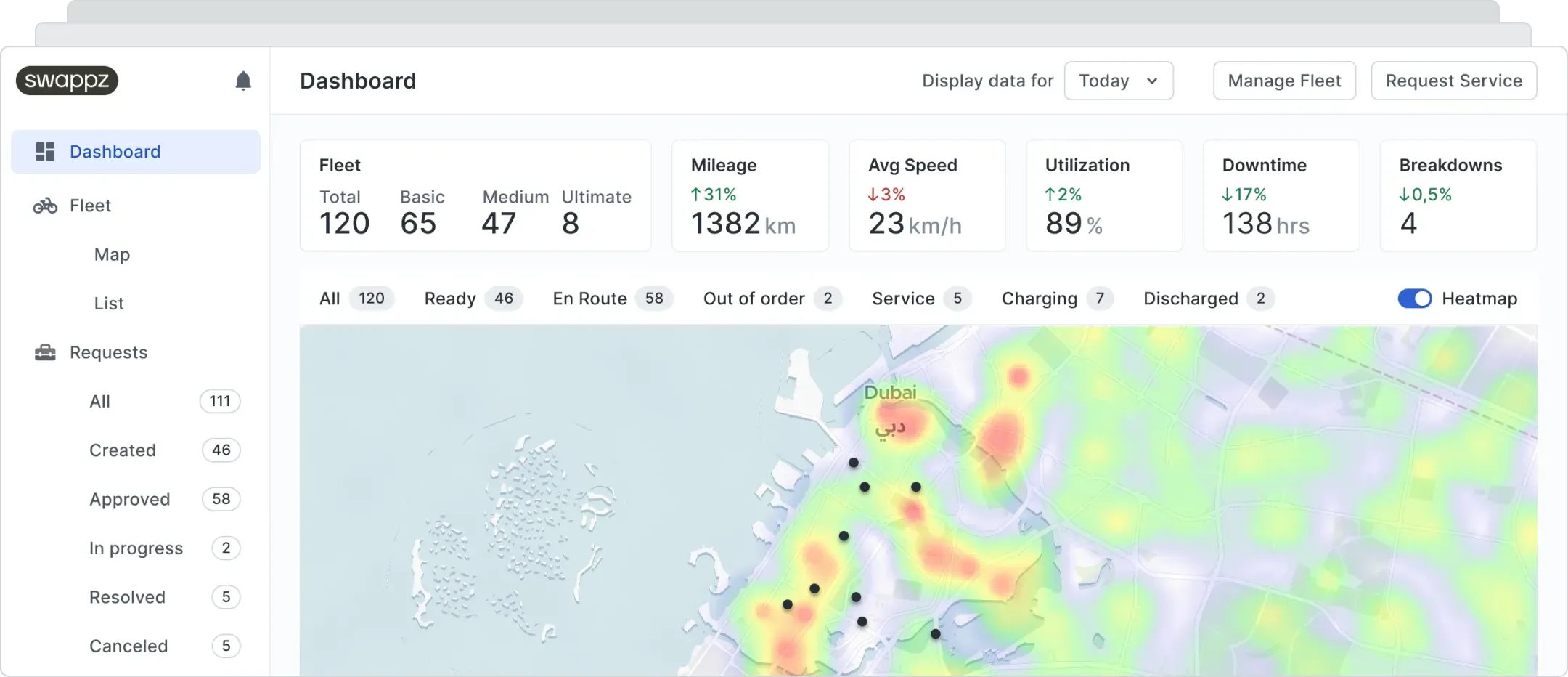
Stack for high-load systems
Technology choices are driven by SLA, load, security, and change velocity — not trends.
Laravel
Fast delivery and a mature ecosystem for domain logic, auth, queues, and admin tooling.
Go
High-performance services and workers for heavy scenarios: integrations, data pipelines, high RPS.
Next.js
SEO and UX for public surfaces, fast rendering, predictable navigation, and maintainable frontend architecture.
Docker
Reproducible environments and a single path from local dev to production via identical containers.
Nginx
TLS termination, proxying, caching, and traffic control — a stable and secure edge layer.
The final shape depends on requirements: monolith + services, queues, caches, replication, and environment boundaries.
When this solution fits
Cloud web software has trade-offs: you need a budget for development and maintenance, and you depend on connectivity and infrastructure.
It fits when several teams share one system and you need unified roles, logs, and reporting.
Budgets under RUB 1.5M and products that do not need App Store / Google Play often fit a web app or PWA — a different track from native/cross-platform mobile (mobile floor: from RUB 1.5M and 3 months).
It is a weaker fit when offline-first autonomy is critical or a single desktop app without shared access is enough.
Engineering cycle
- 1
Discovery & System Design
Domain model, database design, and architecture before implementation: service boundaries, integrations, failure modes, SLA.
- 2
Development
Maintainable codebase: SOLID, patterns, reviews, typing, dependency control, and debt management.
- 3
Quality Assurance
Automated testing for critical flows, API contract checks, and load testing for bottlenecks.
- 4
Deployment & DevOps
CI/CD pipelines, containerization, environments, monitoring and alerting. Controlled releases with minimal downtime.
Quality standards
Data security
Roles and policies, audit logs, least privilege, secret management, and safe integrations.
High Availability
Redundancy for critical components, controlled degradation, backups, and recovery scenarios.
Horizontal scaling
Architecture that allows adding capacity without rewriting: caching, queues, and sharding when needed.
Projects where web architecture mitigates real risks
Portfolio examples: high load, integrations, complex calculations, and scenarios where errors translate into SLA breaches and money.


